

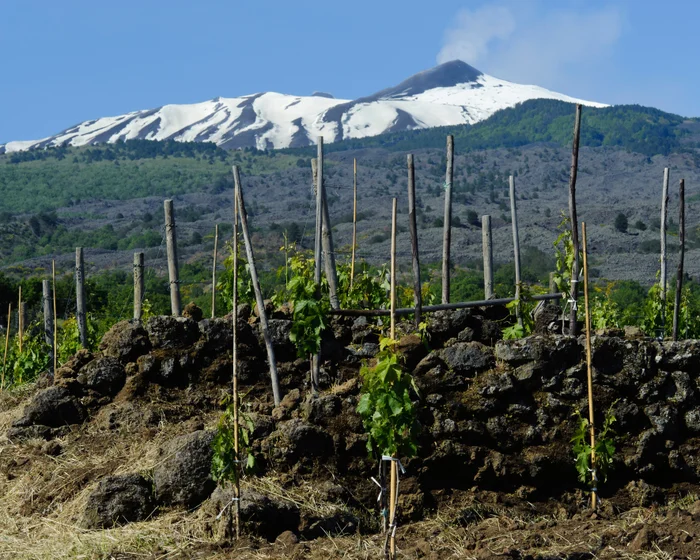
Vines on volcanic soil are hard to grow and their grapes are hard-won, but it all combines to produce wines with a very particular sense of place
Good stories need jeopardy. Take The Princess Bride, one of my favourite films, which I recently introduced to my mildly terrified children. It’s a cult love story of high peril: Westley, believed dead, sets out to win back Buttercup (forced into marriage with another) on a quest involving pirates, duels, torture, a miracle and a battle of wits over a goblet of poisoned wine. There is struggle, magic and, ultimately, emotional reward. You’ll need to stay with me here: volcanic vines, too, tend to have a rocky journey, albeit with happy results for the drinker.
My ears perk up at the term “volcanic wine”, despite being less a style than a geological category. Volcanic soils take many forms – ash, basalt, obsidian, pumice, tuff – and interact with climate, altitude, water availability, grape variety and farming to produce wines with a very particular sense of place. Often, they have little in common with each other; a deep, rich nerello mascalese from Mount Etna’s north side bears little comparison to a light, leathery listán negro from Tenerife, say. And yet I’m sure there is something – perhaps it’s more a feeling than a taste – that I get from wines from volcanic terroirs. “It’s a hard thing to get across,” agrees importer Nic Rizzi of Modal Wines, “but they do have an extra tension.”